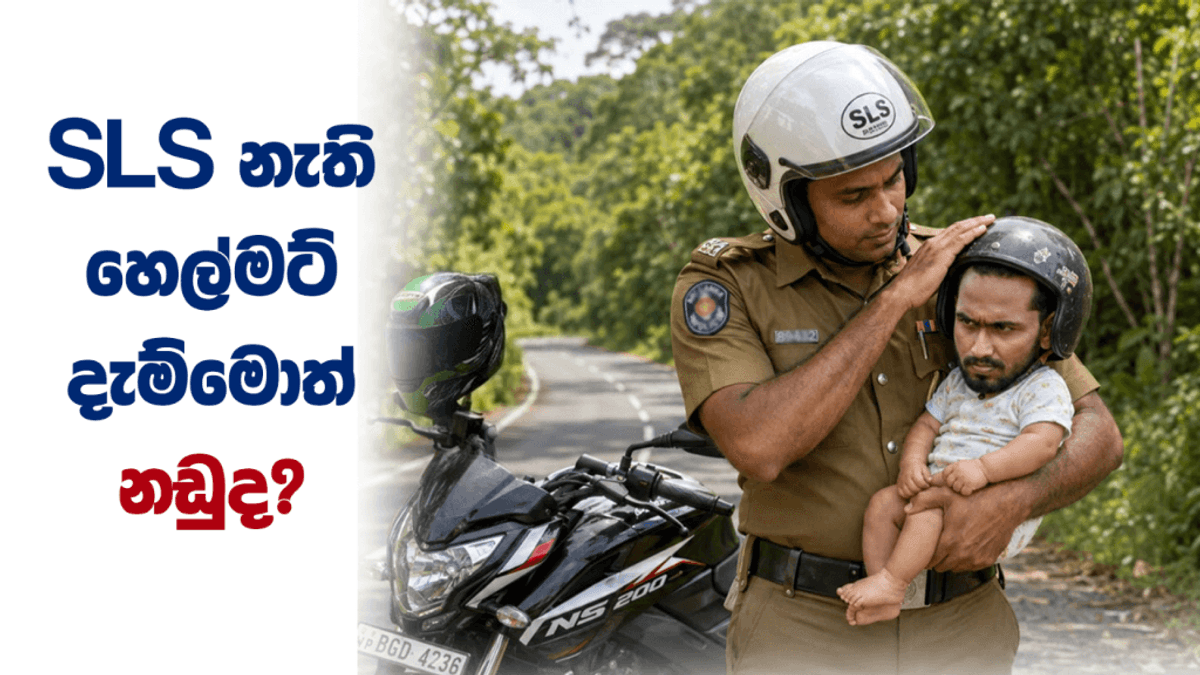
Banned for Being Safe: ලෝකපූජිත Helmet ලංකාවේ Illegal වුණේ කොහොමද?
Imported Helmets දාන එක නීති විරෝධීද?
පාරිභෝගික කටයුතු පිළිබඳ අධිකාරිය (CAA) පහුගිය දවස් කිහිපයේ ලංකාව පුරාම ලොකු වැටලීම් (Raids) මාලාවක් පටන් ගත්තා. මේ වෙද්දී වැටලීම් 98ක් කරලා, SLS නමැති ශ්රී ලංකා ප්රමිති සහතිකය නැති හෙල්මට් සිය ගණනක් ඔවුන් භාරයට අරගෙන රාජසන්තක කරලා තියෙනවා. SLS Mark එක නැතිව හෙල්මට් විකුණන එක සම්පූර්ණයෙන්ම වර්තමාන නීති රෙගුලාසි වලට පටහැනී කියලා ඔවුන් අනතුරු ඇඟවීම් පවා නිකුත් කර තිබුණා. ඒ වගේම Protective helmets for vehicle users කියන්නේ SLS තත්ත්ව සහතිකය අත්යවශ්ය භාණ්ඩ ලැයිස්තුවේ තියෙන එකක්.
මේ තත්ත්වයෙන් බාල ප්ලාස්ටික් බාල්දි මාකට් එකෙන් අයින් කරන එක අත්යවශ්ය දෙයක් වුණත්, කවුරුත් කතා නොකරන ලොකු Policy සම්බන්ධ ප්රශ්නයක් මෙතන තියෙනවා. ඒ තමයි, මේ System එක නිසා ලෝකයේ ඉහළම තත්වයේ Motorcycle Helmets (DOT, ECE, හෝ JIS වැනි සහතික තිබුණත්) ලංකාව ඇතුළේ විකුණන එක හරි, පාවිච්චි කරන එක හරි Illegal වෙන එක. ඇත්තටම මේක අද ඊයේ ආපු නීතියක් නෙවෙයි (Full Face Helmet තහනම ආසන්න කාලයේ ආපු එකක්). නමුත් CAA එකෙන් දාපු Post එකත් එක්ක මේ මාතෘකාව නැවතත් උඩට ආවා.
Rider කෙනෙක් විදියට මටත් හිතුණා මේ ප්රශ්නයේ ඇත්තටම තියෙන නීතිමය සහ ප්රායෝගික පැත්ත මොකක්ද, කොහොමද ඉදිරියේදී මේ නීති ක්රියාත්මක වෙන්නේ කියලා හොයලා බලන්න. ඒ නිසා අද මම Consumer Affairs Authority (CAA), Ministry of Transport, සහ Sri Lanka Standards Institution (SLSI) එකේ නිලධාරීන්ට කතා කළා. මේ තියෙන්නේ එයාලා Officially මට Confirm කරපු දේවල්:
1. The Consumer Affairs Authority (CAA): “අපි Foreign Stickers විශ්වාස කරන්නේ නැහැ”
2015 ජූලි 16 වෙනිදා ආපු 1923/65 අතිවිශේෂ ගැසට් පත්රයේ 59 දරන නියෝගය (Direction No. 59 - Gazette Extraordinary No. 1923/65) ගැන අහන්න මම ගත්ත Call එකකදී CAA නිලධාරියෙක් මේ නීතිය පැහැදිලි කළේ මෙහෙමයි:
“මිනිස්සු පිටරටින් බඩු ගෙනල්ලා බොරුවට Foreign certification labels ගහනවා. මාකට් එකේ Fake certificates පිරිලා තියෙන නිසාත්, අපිට හැම හෙල්මට් මාදිලියකම සහ හැම අන්තර්ජාතික සහතිකයකම Compliance එක verify කරන්න දැනට ප්රායෝගික ක්රමවේදයක් නැති නිසාත් SLS mark එක වැදගත්.”
Fake දේවල් අල්ලන එක අනිවාර්ය වුණත්, මේ නීතිය නිසා නියම $700ක් විතර වෙන Japanese Shoei/Arai නැත්නම් European AGV helmets පවා, Local SLS sticker එක නැති වුණාම illegal contraband විදිහට සලකනවා.
2. Ministry of Transport: Riders ලට Legal Protection එකක් නැහැ
Gazette Extraordinary No. 2287/28 (2022 ජූලි 7 Motor Traffic Act එක යටතේ) අනුව, පාරේ දාගෙන යන හැම protective helmet එකක්ම SLS 517:1994 standard එකට ගැළපෙන්න ඕනේ වගේම official SLS product certification mark එක තියෙන්නම ඕනේ (මේක ඇතුළට හෙල්මට් එකේ materials, structure වගේ ගොඩක් දේවල් සඳහා රෙගුලාසි ඇතුළත්).
European (ECE), American (DOT), හරි Japanese (JIS) standards යටතේ තියෙන imported gear පාවිච්චි කරන riders ලා ගැන officials ලගෙන් ඇහුවම, එයාලා confirm කළේ SLS mark එක physically නැත්නම් ඒ helmet එක road traffic regulations වලට fail වෙනවා කියලයි.
3. Sri Lanka Standards Institution (SLSI): “පිටරටින් Certify කරන්න මිලියන ගාණක් යනවා”
මේ ප්රායෝගික ප්රශ්නය SLSI officials ලා එක්ක කරපු call වලදීත් confirm වුණා.
- Quality Assurance Division: Personal imports එයාලගේ Quality Assurance / Non-Food Division එකට අයිති වුණත්, individual riders ලට ලේසියෙන් මේක කරගන්න ක්රමයක් නැහැ කියලා එයාලා confirm කළා.
- Senior Director Level: Quality Assurance Division එකේ Senior Director Level නිලධාරියෙක් එක්ක කෙළින්ම කතා කළාම එයා මේකේ ඇත්ත administrative තත්ත්වය සහ ඒකේ තියෙන සංකීර්ණ බව ගැන පැහැදිලි කළා:
“SLS අනිවාර්ය කරපු දෙයකට අපි foreign certifications පිළිගන්නේ නැහැ. SLS mark එක දෙන්න නම්, SLSI auditors ලා physically පිටරට ගිහින්, ඒ foreign factory එක inspect කරලා, ISO systems audit කරලා, local sample tests කරන්න ඕනේ. මේකට රුපියල් මිලියන ගාණක් යනවා… පොඩි helmets තොගයකට කවුරුත් එච්චර ගාණක් වියදම් කරන්නේ නැහැ.”
Professional motorsport/racing වගේ narrow technical exception එකක් යටතේ ගෙනාවොත් මිසක්, සාමාන්ය rider කෙනෙක්ට personal foreign helmet එකක් legally import කරන්න හරි certify කරන්න හරි practical ක්රමයක් නැහැ කියන එක එයා තවදුරටත් පැහැදිලි කළා (තියෙන ක්රමවේදයන් සෑහෙන්න සංකීර්ණයි).
⚖️ The Regulatory Paradox (නීතියේ පරස්පරතාවය)
- Basic Mass-Market Shells: Legal (SLS sticker එක තියෙනකම්).
- Fake Plastic Buckets: Illegal (CAA raids වලින් අල්ලනවා).
- World-Class DOT / ECE 22.06 / JIS Certified Gears: Banned (කඩවල් වලින් තහනම් කරලා).
ECE 22.06 (Europe), DOT (USA), JIS (Japan) හරි Snell වගේ safety standards වලදී brutal rotational acceleration සහ penetration tests කරනවා, ඒවා අපේ baseline local requirements වලට වඩා ගොඩක් ඉහළයි. ඒත්, ජපානෙට හරි යුරෝපෙට හරි auditors ලා යවලා helmets 10ක batch එකක් audit කරන්න local importers ලට රුපියල් මිලියන ගාණක් වියදම් කරන්න බැරි නිසා, high-end safety gear මාකට් එකෙන් අයින් වෙලා යනවා.
🛠️ මේක ප්රායෝගිකව හදන්නේ කොහොමද? (How to Actually Fix This)
කඩවල්වල තියෙන fake helmets අයින් කරන එක අත්යවශ්යයි. හැබැයි safety එක ගැන හිතන riders ලට bureaucratic sticker එකක්ද නැත්නම් superior head protection එකක්ද කියලා තෝරාගන්න බල කරන එක broken policy එකක්. ඒ වගේම, නිකම්ම foreign certificates digital විදිහට accept කරන්න ගියොත් fake බඩු ගේන අයට ඒක ලොකු loophole එකක් වෙනවා. මේකට ඕනේ practical විසඳුමක්:
- Localized Batch Testing & Equivalence Stickers: SLSI එකෙන් auditors ලා පිටරට යවලා කෝටි ගණන් වියදම් කරනවා වෙනුවට, local importers ලට පුළුවන් වෙන්න ඕනේ එයාලා ගේන high-end ECE/JIS batch එකෙන් sample එකක් SLSI එකට දීලා local physical testing එකක් කරගන්න. ඒකට reasonable fee එකක් අරගෙන, pass වෙන batch එකට විතරක් issue කරන tamper-proof “SLS Equivalence” sticker එකක් දෙන්න පුළුවන්. එතකොට digital certificates පෙන්නලා බාල බඩු කන්ටේනර් පිටින් ගේන fraud එකත් නැවතිනවා.
- Streamlined Personal Certification: Personal use එකට ECE/JIS helmet එකක් ගේන rider කෙනෙක්ට, ඒක SLSI එකට අරන් ගිහින් physical inspection එකක් කරලා, පොඩි fee එකක් ගෙවලා local compliance sticker එකක් අරගන්න streamlined ක්රමයක් හදන්න ඕනේ. නිකම්ම “personal imports exempt” කිව්වොත් black-market smugglers ලා ඒ loophole එක පාවිච්චි කරනවා. හැබැයි මේ වගේ individual inspection එකක් තියෙනකොට ඒ රිස්ක් එක නැහැ.
- Equip Enforcement with Smart Verification: පාරේ ඉන්න traffic cop කෙනෙක්ට හරි CAA inspector කෙනෙක්ට හරි පාර අයිනේ ඉඳන් මේක genuine fiberglass shell එකක්ද නැත්නම් fake ABS ප්ලාස්ටික් එකක්ද කියලා බලලා කියන්න බැහැ. ඒ නිසා මේ අලුත් Equivalence stickers වලට QR code එකක් හරි digital verification system එකක් හරි link කරන්න ඕනේ. Sticker එක scan කළාම importer, batch එක සහ standards ගැන details එන්න හැදුවම enforcement එක ගොඩක් ලේසියි.
Road safety මනින්න ඕනේ impact physics වලින් මිසක්, out-dated administrative red tape වලින් නෙවෙයි. Consumers ලාව “protect” කරන්න හදපු policy එකකින් ලෝකේ තියෙන safety standard වලින් ඉහළින්ම තියෙන helmets බෑන් වෙනවා නම්, අපිට ඕනේ ඒ නීතිය තවත් තද කරන එක නෙවෙයි world-class protection එකක් ලංකාවට ගේන්න පුළුවන් විදිහේ smart regulatory system එකක් හදන එකයි.
📑 මේකට අදාළ පනත්, ගැසට් සහ වෙනත් නිල ලියකියවිලි (Official Documents & References)
-
අත්යාවශ්ය භාණ්ඩ සඳහා SLS අනිවාර්ය කිරීම (SLSI Mandatory Standard List)
🔗 SLSI Information for Local Manufacturers -
2015 ජූලි 16 වෙනිදා 1923/65 අතිවිශේෂ ගැසට් පත්රය (Direction No. 59 - Gazette Extraordinary No. 1923/65)
🔗 Download Gazette 1923-65 (PDF) -
2022 ජූලි 7 Motor Traffic Act එක යටතේ 2287/28 අතිවිශේෂ ගැසට් පත්රය (Gazette Extraordinary No. 2287/28)
🔗 Download Gazette 2287-28 (PDF) -
DOT, ECE, Snell වැනි ජාත්යන්තර Helmet Safety Standards පිළිබඳ විස්තරය
🔗 RevZilla Helmet Safety Standards Breakdown
Banned for Being Safe: How Bureaucracy Outlaws World-Class Protection Are Imported Helmets Illegal in Sri Lanka?
The Consumer Affairs Authority (CAA) recently launched island-wide raids targeting motorcycle helmets lacking the Sri Lanka Standards (SLS) mark. While seizing cheap, non-compliant helmets is necessary, the current enforcement framework creates a major policy paradox: world-class helmets certified under international standards (DOT, ECE 22.06, JIS, Snell) are effectively illegal to sell or use in Sri Lanka unless they carry a physical SLS sticker.
Following official inquiries with the CAA, the Ministry of Transport, and the Sri Lanka Standards Institution (SLSI), this investigation details the administrative red tape criminalizing elite safety gear—and outlines three pragmatic regulatory fixes.
Key Official Confirmations:
- CAA: Cannot verify foreign certification labels on individual imports due to prevalence of counterfeits, making physical SLS marking mandatory.
- Ministry of Transport: Confirmed that under Gazette Extraordinary No. 2287/28 (Motor Traffic Act), any helmet without a physical SLS 517:1994 mark fails road traffic compliance.
- SLSI: Granting an SLS mark requires physical overseas factory inspections and ISO audits costing millions of rupees—an impossible administrative burden for small batches of premium helmets.
Pragmatic Solutions:
- Localized Batch Testing & Equivalence Stickers
- Streamlined Personal Compliance Certificates
- Digital QR Verification for Traffic Enforcement
📑 Official Gazettes, Acts & Reference Documents
-
SLSI Compulsory Standard Certification List
🔗 SLSI Information for Local Manufacturers -
Gazette Extraordinary No. 1923/65 (July 16, 2015 - Direction No. 59)
🔗 Download Gazette 1923-65 (PDF) -
Gazette Extraordinary No. 2287/28 (July 7, 2022 - Motor Traffic Act Regulations)
🔗 Download Gazette 2287-28 (PDF) -
International Helmet Safety Standards (DOT, ECE 22.06, Snell, JIS)
🔗 RevZilla Technical Breakdown of Global Safety Standards